


01 Overview
Understanding Spondylolisthesis
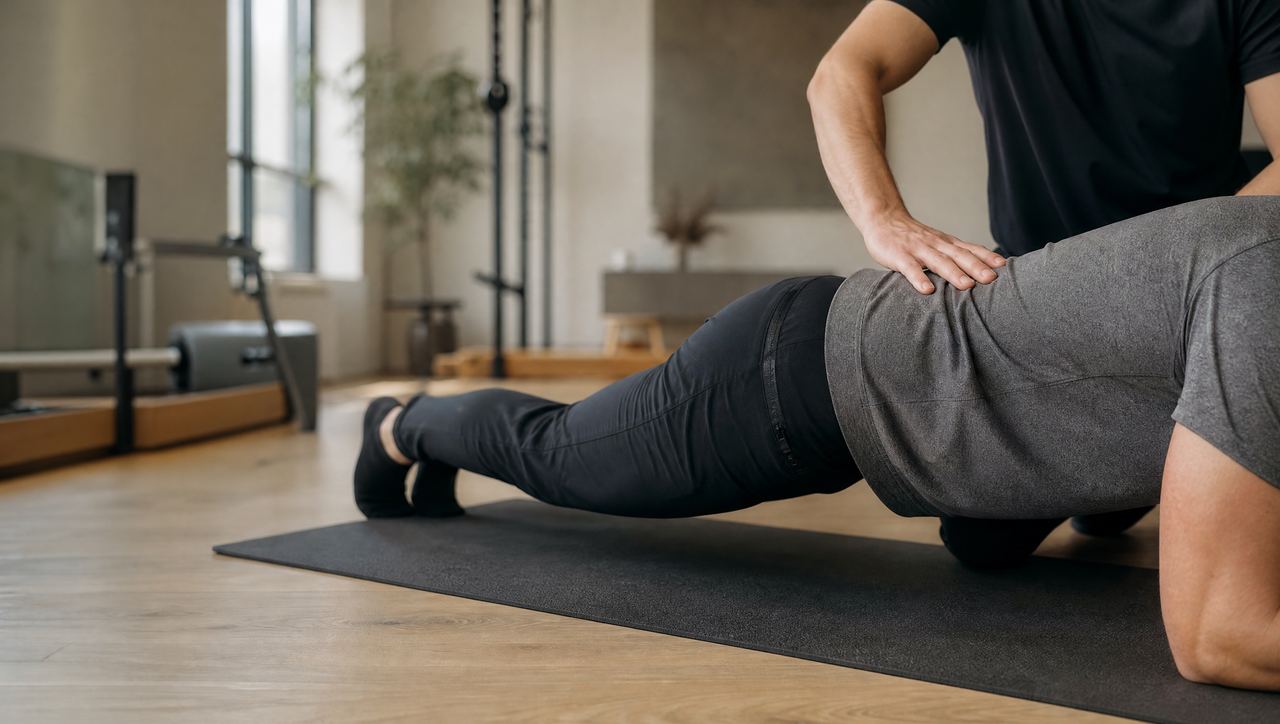
Spondylolisthesis happens when one vertebra in your spine slips out of place onto the bone below it. This misalignment can irritate nearby nerves, leading to lower back pain, stiffness, leg pain, or tingling down into your thighs and calves. It can develop from stress fractures, aging, arthritis, or repetitive strain from sports and activities. Some people have mild cases with little discomfort, while others struggle daily with pain and mobility issues. The good news? Physical therapy can help restore stability, ease pain, and improve function without relying on invasive treatments.
Often treated with
02 Benefits
Top 3 Benefits of Treating Spondylolisthesis
- 01
Relieve Pain & Nerve Irritation
Therapy helps reduce pressure on irritated nerves and decreases inflammation in the spine. With guided treatment, you’ll notice fewer flare-ups, less leg pain, and more freedom to move without that constant ache in your lower back.
- 02
Improve Strength & Stability
By strengthening your core, hips, and back muscles, therapy stabilizes your spine and prevents further slippage. Stronger support means less stress on the vertebrae, which helps protect your spine long-term and boosts everyday mobility.
- 03
Avoid Surgery & Heavy Medications
Many people think surgery is the only option, but conservative treatment often works. Physical therapy addresses the root of the problem, helping you regain comfort and control without relying on long-term medication or invasive procedures.
03 How we treat it
5 Ways to Treat Spondylolisthesis
Your plan is matched to your diagnosis and how you like to be treated — and adjusted at every visit.
- 01
Core strengthening
Builds strong abdominal and back muscles to stabilize the spine and prevent further slippage.
- 02
Manual therapy –
Hands-on techniques to ease stiffness, restore movement, and improve alignment.
- 03
Stretching & flexibility training –
Reduces tension in tight muscles, easing strain on the spine.
- 04
Postural education –
Teaches you proper movement patterns to protect your spine and reduce pain.
- 05
Personalized home program
Exercises you can do daily to maintain progress and prevent flare-ups.
04 Questions
Frequently asked questions.
I would like to thank the staff at BD Physical Therapy, as they treated me with respect, and definitely went above and beyond to support and motivate me to work on improving my physical health. The staff assisted me by creating a…
What are the main symptoms of spondylolisthesis?
Lower back pain, stiffness, leg pain, tingling, or weakness are the most common signs.
What causes vertebrae to slip?
It can be caused by stress fractures, aging, arthritis, genetics, or repetitive stress from sports.
Do I need surgery for spondylolisthesis?
Not always. Many cases are managed successfully with conservative care like therapy.
How long will it take to feel better?
Most patients notice improvement within 4–6 weeks of consistent therapy.
Is exercise safe with spondylolisthesis?
With proper guidance, yes. A therapist will show you safe movements that build strength without causing harm.
Will this condition get worse over time?
It can progress, but with the right treatment, symptoms can be controlled and further slippage prevented.
Can physical therapy really help?
Yes! Therapy strengthens supporting muscles, relieves nerve pressure, and improves mobility.
Can therapy help me avoid pain medication?
Yes—therapy addresses the source of the problem so you can rely less on painkillers.
05 Related care
Keep exploring.
- AddressBD Physical Therapy, Suite B
63 South Main Street, Randolph, MA 02368 - HoursMonday – Friday · 8:00 AM – 8:00 PM
- Languages
- English
- Kriolu
- Español
- Français
- ਪੰਜਾਬੀ
- Next doorBD Chiropractic, Suite A · (781) 961‑4460