


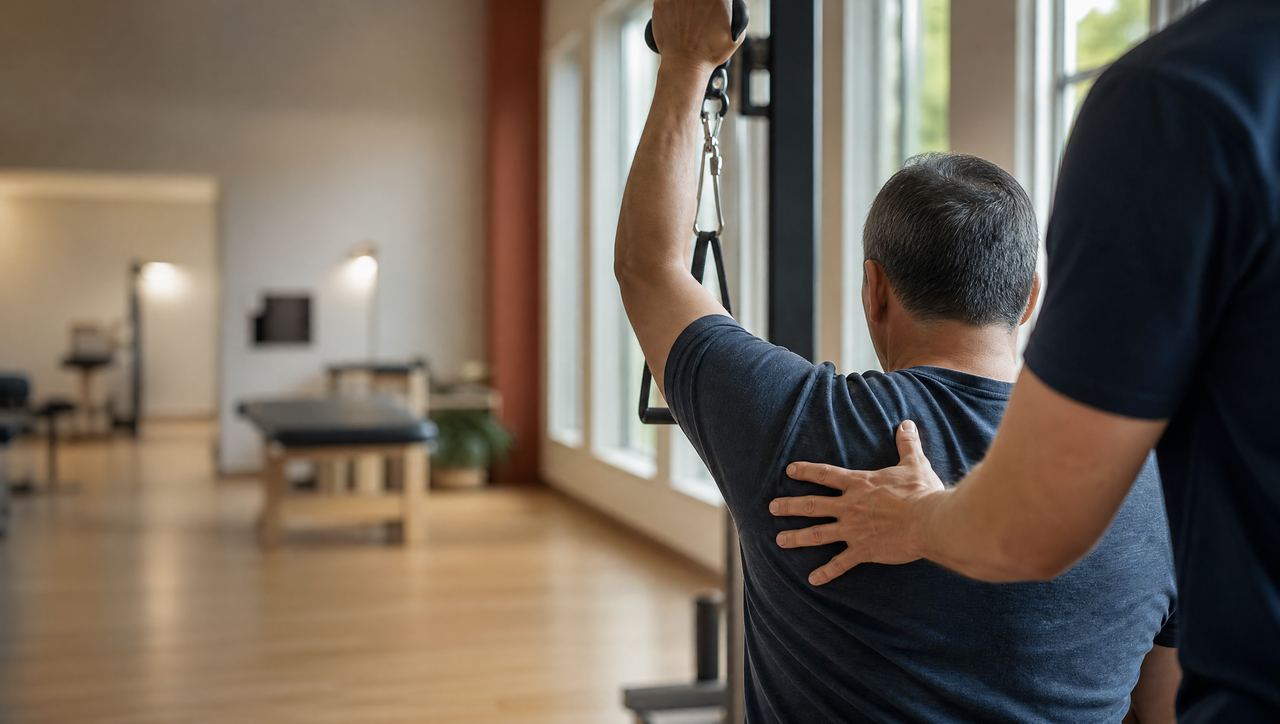
Shoulder too stiff to move?
Frozen Shoulder & Adhesive Capsulitis
01 Overview
Understanding Frozen Shoulder & Adhesive Capsulitis
Frozen Shoulder, also called Adhesive Capsulitis, happens when the shoulder joint becomes stiff and painful due to inflammation and tightening of the capsule around it. This condition usually develops gradually and can last for months or even years if left untreated. It often occurs after an injury, surgery, or in people with conditions like diabetes. The main symptoms include pain, limited mobility, and difficulty lifting or rotating the arm, which can interfere with even the simplest tasks like reaching overhead, getting dressed, or sleeping comfortably.
Often treated with
02 Benefits
Top 3 Benefits of Treating Frozen Shoulder & Adhesive Capsulitis
- 01
Regain Shoulder Mobility
Therapy helps loosen the tight capsule around the shoulder joint through guided stretches and mobility exercises. Over time, this restores flexibility and allows you to reach, lift, and move your arm without constant restriction.
- 02
Reduce Pain and Stiffness
By improving circulation, decreasing inflammation, and retraining movement, therapy reduces the painful “locked up” feeling in your shoulder. This makes everyday activities—like brushing your hair or reaching into cabinets—much easier.
- 03
Prevent Long-Term Limitations
Without treatment, frozen shoulder can linger for years and lead to permanent stiffness. Physical therapy speeds recovery, strengthens surrounding muscles, and ensures you regain function before it becomes a long-term problem.
03 How we treat it
Top 5 Treatment Options
Your plan is matched to your diagnosis and how you like to be treated — and adjusted at every visit.
- 01
Gentle stretching programs
Restores flexibility in the shoulder joint capsule over time.
- 02
Manual therapy
Hands-on techniques to loosen tight tissues and reduce stiffness.
- 03
Strengthening exercises –
Builds shoulder and upper back muscles to support recovery.
- 04
Heat & cold therapy
Helps relieve inflammation and calm pain during the healing process.
- 05
Home exercise plan
Keeps progress going between visits for faster, steady improvement.
04 Questions
Frequently asked questions.
I would like to thank the staff at BD Physical Therapy, as they treated me with respect, and definitely went above and beyond to support and motivate me to work on improving my physical health. The staff assisted me by creating a…
What causes frozen shoulder?
It often develops after injury, surgery, or from medical conditions like diabetes or prolonged immobility.
How long does frozen shoulder last?
Yes, but it takes much longer—physical therapy reduces stiffness and shortens recovery time.
Can frozen shoulder heal on its own?
Many patients notice improvement within a few sessions, but results vary depending on the severity of the condition
Is frozen shoulder the same as rotator cuff injury?
No. Frozen shoulder affects the capsule around the joint, while rotator cuff injuries affect tendons.
Can physical therapy prevent frozen shoulder from coming back?
Yes—regular stretching and strengthening greatly reduce the risk of recurrence.
Will I need surgery for frozen shoulder?
Surgery is rare. Most cases improve with non-invasive physical therapy.
How painful is frozen shoulder treatment?
Therapy may feel challenging, but it’s done gradually to minimize discomfort while improving mobility.
How soon will I see improvement with therapy?
Many patients feel relief within weeks, with steady progress continuing over months.
05 Related care
Keep exploring.
- AddressBD Physical Therapy, Suite B
63 South Main Street, Randolph, MA 02368 - HoursMonday – Friday · 8:00 AM – 8:00 PM
- Languages
- English
- Kriolu
- Español
- Français
- ਪੰਜਾਬੀ
- Next doorBD Chiropractic, Suite A · (781) 961‑4460