


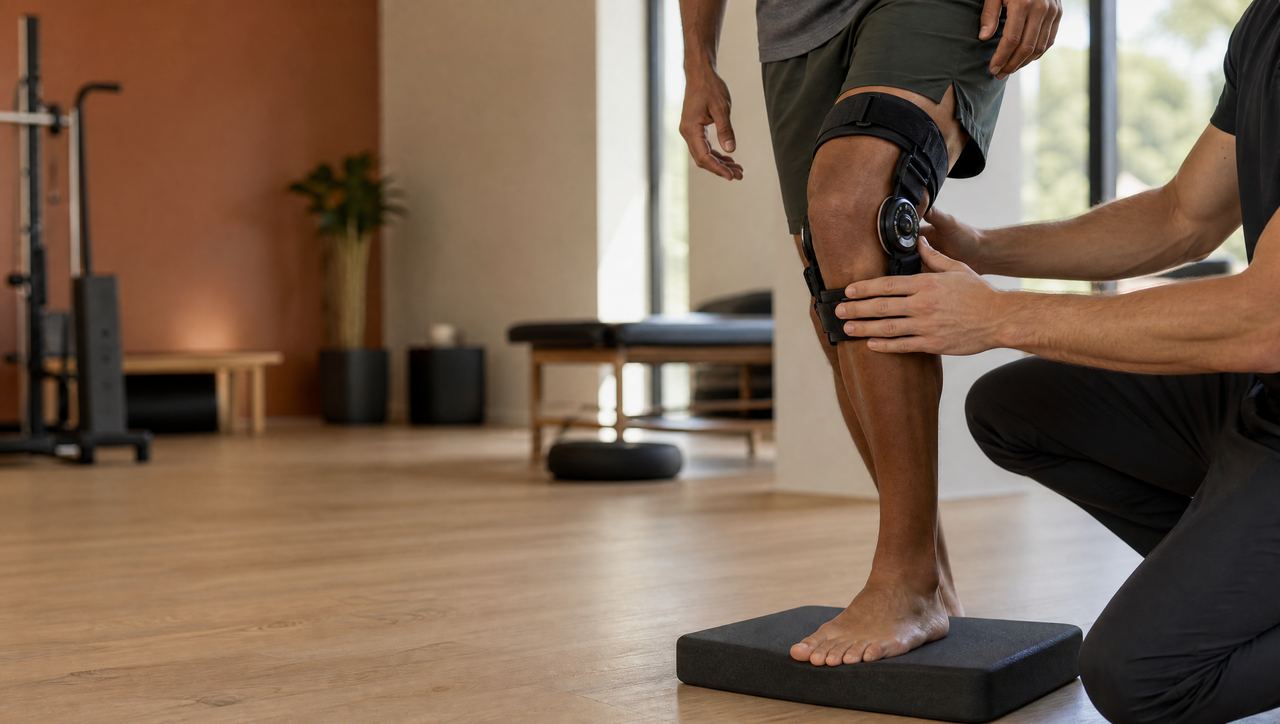
ACL injury slowing life down?
Anterior Cruciate Ligament (ACL) Injuries
01 Overview
Understanding ACL Injuries
The ACL (anterior cruciate ligament) is one of the key ligaments that stabilizes your knee. An ACL injury often happens during sports or sudden movements—like quick pivots, awkward landings, or sudden stops. Even a misstep on uneven ground can cause a tear or strain. When injured, the knee may feel unstable, painful, and swollen, making it hard to walk, run, or stay active.
Often treated with
02 Benefits
Top 3 Benefits of ACL Treatment
- 01
Regain Stability and Confidence
Treatment strengthens the muscles around your knee and restores balance, so you don’t feel like your leg will “give out.” You’ll get back to daily movement and sports without second-guessing every step.
- 02
Speed Up Recovery Safely
Guided physical therapy ensures you heal at the right pace, avoiding setbacks from doing too much too soon. Proper rehab shortens downtime and helps you recover stronger than before.
- 03
Prevent Future Knee Problems
Strengthening the ACL and surrounding muscles lowers the risk of re-injury and protects against arthritis later in life. Treatment builds lasting resilience, so your knee can handle the activities you love.
03 How we treat it
Top 5 Treatments
Your plan is matched to your diagnosis and how you like to be treated — and adjusted at every visit.
- 01
Customized physical therapy
Exercises to rebuild strength, improve balance, and restore full knee function.
- 02
Manual therapy –
Hands-on techniques to reduce stiffness and improve mobility.
- 03
Strength & stability training –
Targeted routines that reinforce muscles supporting the ACL.
- 04
Post-surgical rehab –
Structured recovery plans if you’ve had ACL reconstruction surgery.
- 05
Injury prevention education
Teaching proper movement and techniques to avoid future tears.
04 Questions
Frequently asked questions.
Great experience here! The staff was very kind and knowledgeable. I feel a lot better than when I came in. If you are looking for client focused & professional Chiropractor/Physical Therapy, come here. The staff are very…
How do I know if I tore my ACL?
Common signs include a popping sound at the time of injury, swelling, pain, and knee instability.
Do all ACL injuries need surgery?
Not always. Partial tears or less active patients may recover with physical therapy alone.
How long does ACL recovery take?
With proper rehab, most patients recover in 6–12 months depending on severity and activity goals.
Can I walk with a torn ACL?
Some people can, but the knee may feel unstable. Walking without treatment risks worsening the injury.
Is physical therapy effective after ACL surgery?
Yes. It’s critical for regaining full strength, flexibility, and stability post-surgery.
Can an ACL heal on its own?
Unlike other tissues, the ACL doesn’t heal fully by itself. Therapy helps you strengthen and adapt.
What sports are most risky for ACL tears?
Sports with sudden stops, pivots, or jumps like soccer, basketball, and skiing carry higher risks.
How can I prevent another ACL injury?
Through targeted strength training, balance exercises, proper footwear, and movement education.
05 Related care
Keep exploring.
- AddressBD Physical Therapy, Suite B
63 South Main Street, Randolph, MA 02368 - HoursMonday – Friday · 8:00 AM – 8:00 PM
- Languages
- English
- Kriolu
- Español
- Français
- ਪੰਜਾਬੀ
- Next doorBD Chiropractic, Suite A · (781) 961‑4460