


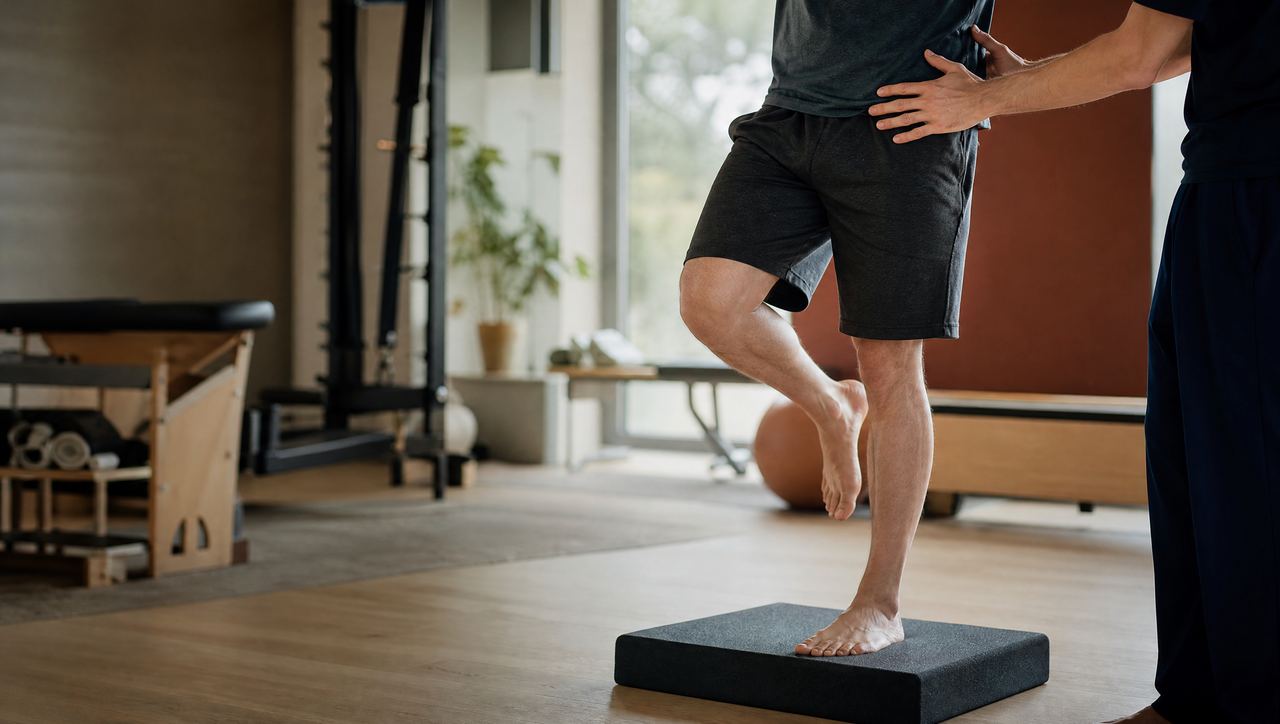
01 Overview
Understanding Joint Instability
Joint instability happens when the ligaments, muscles, or tendons that support a joint become weak or overstretched. This makes the joint feel loose, wobbly, or prone to “giving out.” It often develops after repeated injuries, dislocations, or wear-and-tear over time. Shoulders, knees, hips, and ankles are most commonly affected. Left untreated, instability can lead to recurring pain, loss of function, and a higher risk of future injuries.
Often treated with
02 Benefits
Top 3 Benefits of Treating Joint Instability
- 01
Restore Strength and Stability
Therapy strengthens the muscles and tissues around the affected joint, giving it the support it needs to stay in place. This means fewer slips or dislocations and more confidence with daily movement or exercise.
- 02
Prevent Chronic Pain and Damage
Instability can lead to repeated injuries that wear down joints. Physical therapy protects your ligaments and cartilage by teaching safe movement patterns and building strength, reducing long-term damage and discomfort.
- 03
Get Back to an Active Lifestyle
Whether it’s walking, exercising, or playing sports, treatment helps you return to the activities you love. Therapy restores control, balance, and stability, so you can move without constantly worrying about your joint slipping out.
03 How we treat it
Top 5 Treatments for Joint Instability
Your plan is matched to your diagnosis and how you like to be treated — and adjusted at every visit.
- 01
Strengthening exercises
Builds supporting muscles to stabilize loose joints.
- 02
Manual therapy
Improves mobility, reduces stiffness, and eases discomfort.
- 03
Balance & coordination training
Retrains the body to move safely and efficiently.
- 04
Bracing or taping
Provides added support during healing and activity.
- 05
Personalized home program
Reinforces therapy progress with daily exercises.
04 Questions
Frequently asked questions.
I would like to thank the staff at BD Physical Therapy, as they treated me with respect, and definitely went above and beyond to support and motivate me to work on improving my physical health. The staff assisted me by creating a…
What causes joint instability?
It often comes from ligament injuries, dislocations, muscle weakness, or repeated strain.
Which joints are most affected?
Shoulders, knees, hips, and ankles are most commonly impacted.
Can physical therapy really fix instability?
Yes—therapy strengthens and stabilizes joints, often preventing the need for surgery.
How long does recovery take?
Mild cases improve in weeks, while more severe instability may take months.
Do I need surgery for joint instability?
Most people recover with physical therapy. Surgery is only needed in severe cases.
Can I still exercise with an unstable joint?
Yes, but only with modifications. Therapy teaches safe, effective movements.
Why does my joint keep slipping out?
Weakened or overstretched ligaments and muscles allow the joint to move abnormally.
Will therapy prevent future dislocations?
Yes—by restoring strength and stability, therapy reduces your risk of re-injury.
05 Related care
Keep exploring.
- AddressBD Physical Therapy, Suite B
63 South Main Street, Randolph, MA 02368 - HoursMonday – Friday · 8:00 AM – 8:00 PM
- Languages
- English
- Kriolu
- Español
- Français
- ਪੰਜਾਬੀ
- Next doorBD Chiropractic, Suite A · (781) 961‑4460