


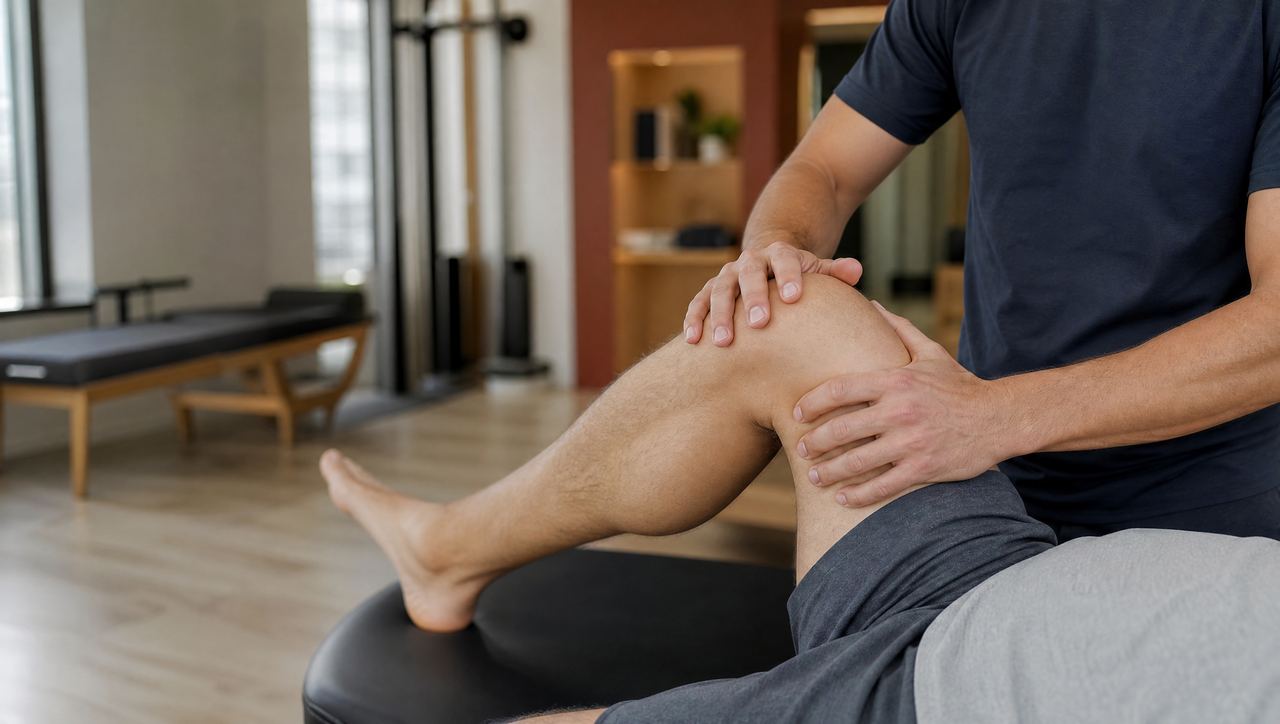
Knee pain after a hard twist?
Medial Collateral Ligament (MCL) Tears
01 Overview
Understanding MCL Tears
The medial collateral ligament (MCL) is a band of tissue on the inside of your knee that keeps it stable. An MCL tear usually happens from a sudden twist, a direct hit to the knee, or quick changes in direction during sports. Symptoms often include pain, swelling, stiffness, and a feeling of instability when walking or turning. While minor tears may heal with rest, moderate to severe injuries typically need physical therapy to fully restore strength and stability.
Often treated with
02 Benefits
Top 3 Benefits of Treating MCL Tears
- 01
Relieve Pain and Swelling
Physical therapy uses gentle exercises, manual techniques, and targeted treatments to calm inflammation and improve circulation. This reduces pain and stiffness, allowing you to move your knee more comfortably in everyday activities.
- 02
Restore Knee Strength and Stability
Therapy strengthens the muscles surrounding your knee and improves joint control. With better support, your knee feels more stable and less likely to “give out,” giving you confidence to walk, bend, and return to sports safely.
- 03
Prevent Long-Term Knee Problems
Without proper rehab, an MCL tear can lead to chronic instability and future injuries. Therapy teaches proper movement, improves flexibility, and strengthens your knee to protect against recurring pain or reinjury.
03 How we treat it
Top 5 Treatments for MCL Tears
Your plan is matched to your diagnosis and how you like to be treated — and adjusted at every visit.
- 01
Targeted strengthening exercises –
Builds support around the knee for improved stability.
- 02
Manual therapy –
Hands-on techniques to reduce stiffness and restore mobility.
- 03
Balance and stability training –
Retrains your body to handle daily activities safely.
- 04
Bracing or support taping
Provides extra protection while the ligament heals.
- 05
Home exercise program
Keeps your recovery progressing between therapy visits.
04 Questions
Frequently asked questions.
Great experience here! The staff was very kind and knowledgeable. I feel a lot better than when I came in. If you are looking for client focused & professional Chiropractor/Physical Therapy, come here. The staff are very…
What causes an MCL tear?
Usually sports injuries, awkward twists, or direct hits to the inside of the knee.
What are the symptoms of an MCL tear?
Pain, swelling, stiffness, and instability along the inner side of the knee.
Can MCL tears heal without surgery?
Yes—most MCL tears heal well with physical therapy and non-surgical care.
How long does recovery take?
Mild tears may heal in a few weeks, while severe ones may take several months.
Can I walk with an MCL tear?
Often yes, but it may be painful or unstable without proper treatment.
Will I be able to return to sports?
Yes—most athletes return to play once strength and stability are restored.
What happens if I don’t treat my MCL tear?
You risk long-term instability, recurring pain, and possible reinjury.
Do I need imaging to diagnose an MCL tear?
Exams often identify it, but MRIs may be used for confirmation and severity.
05 Related care
Keep exploring.
- AddressBD Physical Therapy, Suite B
63 South Main Street, Randolph, MA 02368 - HoursMonday – Friday · 8:00 AM – 8:00 PM
- Languages
- English
- Kriolu
- Español
- Français
- ਪੰਜਾਬੀ
- Next doorBD Chiropractic, Suite A · (781) 961‑4460