


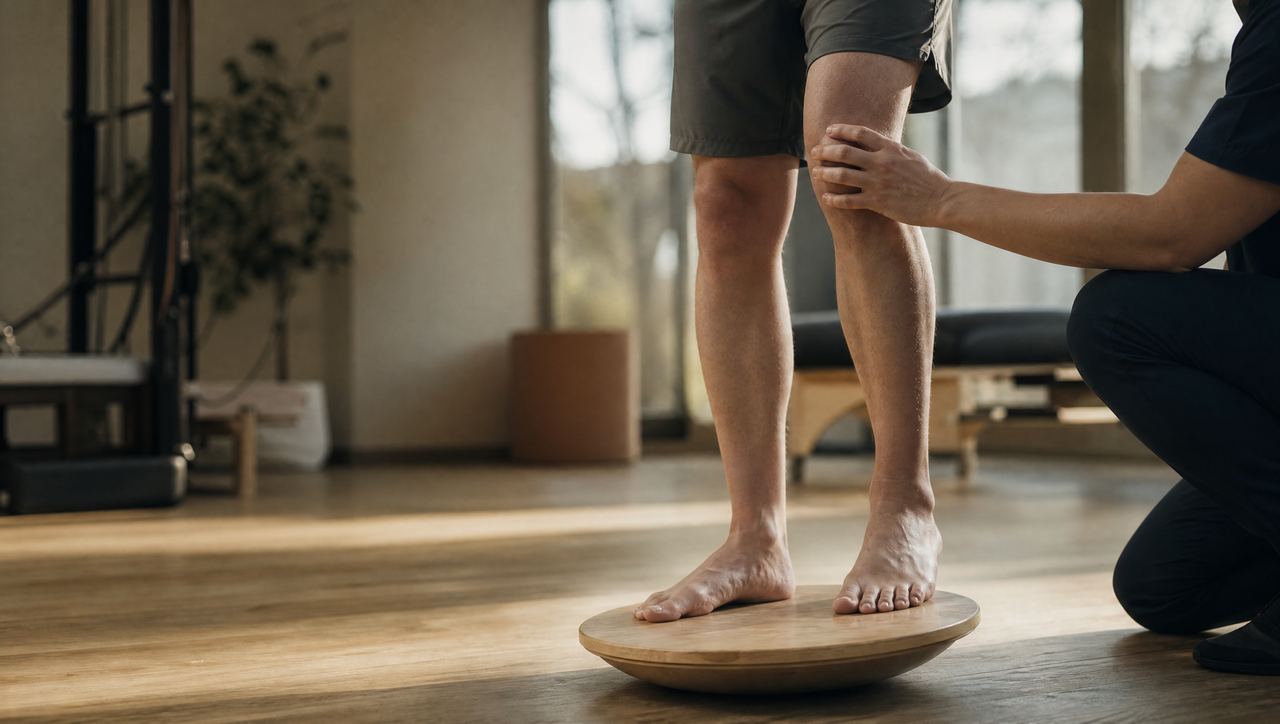
A plan built around how you stand and walk.
Physical Therapy For Foot Pain
01 Overview
Why Foot Pain Is Also A Movement Problem
Your feet absorb load with every step, so pain in the heel, arch, ball of the foot or ankle quickly changes how you walk, stand and climb stairs. Common sources include plantar fasciitis, Achilles tendonitis, other tendon irritation, sprains, and stiffness or arthritis in the foot and ankle joints. Many of these build up gradually when activity, footwear or body weight changes faster than the tissues can adapt.
Physical therapy looks beyond the sore spot. At BD Physical Therapy, in Suite B at 63 South Main Street in Randolph, your therapist watches you walk, checks ankle and toe mobility, calf and hip strength, and balance, and asks about your shoes and daily time on your feet. Those findings shape a plan that first calms irritated tissue, then rebuilds the strength and control your foot needs for walking, standing, work and sport.
For ankle sprains and broader lower-leg problems, see our page on foot and ankle pain relief.
Often treated with
02 Benefits
Goals Of Physical Therapy For Foot Pain
- 01
Easier First Steps And Longer Walks
Treatment targets the activities that bother you most, whether that is getting out of bed in the morning, standing through a shift or walking the dog, and builds your tolerance for them step by step.
- 02
A Foot And Leg That Share The Load
Strengthening the small muscles of the foot along with the calf and hip helps spread the forces of walking and running, so no single tendon or ligament takes all the strain.
- 03
Practical Changes You Can Make Now
You get specific guidance on footwear, activity pacing and home exercises, giving you tools to manage symptoms between visits and to handle any later flare-ups on your own.
03 How we treat it
How We Treat Foot Pain In Physical Therapy
Your plan is matched to your diagnosis and how you like to be treated — and adjusted at every visit.
- 01
Gait And Foot Mechanics Assessment
Observation of how you walk, plus checks of ankle and big-toe motion, arch control, calf flexibility and single-leg balance, to find what is overloading the painful area.
- 02
Manual Therapy
Joint mobilization for a stiff ankle or midfoot and soft-tissue work for the calf and sole, used to improve motion and reduce sensitivity before exercise.
- 03
Progressive Strengthening
Calf raises, toe and arch exercises, and hip strengthening, loaded gradually so tendons and the plantar fascia can adapt to more demand over time.
- 04
Instrument-Assisted Soft-Tissue Work
The Graston technique may be used on tight or tender tissue in the calf, Achilles region or arch, alongside your exercise program.
- 05
Taping And Footwear Advice
Short-term taping to offload sore tissue, plus guidance on supportive shoes and whether an off-the-shelf or custom orthotic is worth considering for your foot.
- 06
Return-To-Activity Plan
A graded walking, running or work-task progression and a home program that keeps building strength after your visits end.
04 Questions
Frequently asked questions.
Great experience here! The staff was very kind and knowledgeable. I feel a lot better than when I came in. If you are looking for client focused & professional Chiropractor/Physical Therapy, come here. The staff are very…
What usually causes foot pain without an injury?
Foot pain that comes on gradually is often an overload problem: the plantar fascia, a tendon or a joint is asked to handle more than it is ready for. Typical triggers include a sudden jump in walking or running, long hours standing on hard floors, worn-out shoes, weight changes, and a stiff calf or ankle. Your evaluation sorts out which factors apply to you.
Why does my heel hurt most with the first steps in the morning?
Pain that is worst with the first steps after sleep or sitting, then eases somewhat as you walk, is a common pattern with plantar fasciitis. The tissue stiffens at rest and is sensitive when first loaded. Gentle calf and foot mobility before standing, supportive footwear around the house and a structured strengthening program are often part of care. See our plantar fasciitis page.
Do I need orthotics or new shoes?
Not everyone does. Your therapist looks at your foot posture, how you walk and the shoes you already wear before suggesting changes. For some people, a more supportive or cushioned shoe, or an off-the-shelf insert, is enough to reduce strain while the foot gets stronger. If a custom orthotic seems worth considering, your therapist will explain why.
Should I stop walking or running until the pain is gone?
Complete rest is rarely needed for overuse-type foot pain, and long breaks can leave tissues less prepared for activity. More often, your therapist helps you scale back the amount or intensity to a level your foot tolerates, then build up gradually. Pain that stays mild during activity and settles by the next morning is a common guide, but your plan will be specific to you.
Can foot pain be connected to my knee, hip or back?
It can work in both directions. Limited ankle motion or a weak arch can change how load travels up the leg, and hip weakness or a back problem can change how your foot meets the ground. Numbness, tingling or burning in the foot can also come from an irritated nerve. That is why your therapist assesses the whole leg, not only the foot.
When should foot pain be seen by a doctor?
See a physician promptly if you cannot bear weight after an injury, felt a pop at the back of the ankle, notice marked swelling or deformity, or have a foot that is red, hot and swollen, especially with fever. People with diabetes or poor circulation should have new foot pain, sores or color changes checked by their doctor. Your therapist will refer you on if the exam raises concerns.
What should I bring to my first foot pain appointment?
Wear clothing that lets your therapist see your lower legs, such as shorts or loose pants. Bring the shoes you wear most often, any inserts or braces you use, and a list of your medications and past injuries or surgeries. If you have imaging reports or notes from your doctor about your foot, bring those as well.
How do I schedule physical therapy for foot pain?
Call BD Physical Therapy at (781) 961-4461. Our office is in Suite B at 63 South Main Street in Randolph and is open Monday through Friday from 8:00 AM to 8:00 PM. When available, we keep a few same-day and next-day openings for new and urgent visits, and our front desk can help with insurance questions.
05 Related care
Keep exploring.
- AddressBD Physical Therapy, Suite B
63 South Main Street, Randolph, MA 02368 - HoursMonday – Friday · 8:00 AM – 8:00 PM
- Languages
- English
- Kriolu
- Español
- Français
- ਪੰਜਾਬੀ
- Next doorBD Chiropractic, Suite A · (781) 961‑4460